
What Does a Postpartum Doula Actually Do? (A Day-by-Day Breakdown)
If you've heard about postpartum doulas but aren't quite sure what they actually do, you're not alone. Many expecting and new parents find themselves asking the same question: what does a doula do after the baby is born?
A postpartum doula provides practical, emotional, and educational support during the weeks and months after birth. Unlike a nanny, whose primary role is caring for the child, a postpartum doula is there to support the entire family as everyone adjusts to life with a new baby.
But what does that support actually look like on a normal day?
The answer changes as your baby grows and your family's needs evolve. Here's a look at what working with a postpartum doula might look like from those first few days at home through the months that follow.
Quick Links
What Does a Doula Do After Birth?
So, what does a doula do once you bring your baby home?
A postpartum doula's role is flexible because every family's needs are different. One parent may need hands-on newborn education and feeding support, while another desperately needs a shower, a meal, and two uninterrupted hours of sleep.
Depending on the family, a postpartum doula may help with:
Newborn care and soothing techniques
Feeding support
Bottle preparation and cleaning
Breast pump cleaning and organization
Diapering and bathing
Understanding newborn sleep patterns
Babywearing
Light meal and snack preparation
Baby laundry
Light household tasks related to the postpartum period
Sibling adjustment
Emotional support for new parents
Newborn education
Helping parents recognize their baby's cues
Creating realistic routines
Providing opportunities for parents to rest and recover
The goal isn't to come into your home and take over. A great postpartum doula helps make life with a newborn feel more manageable, while giving parents the support and confidence they need to find their own rhythm.
Birth Doula vs. Postpartum Doula: What's the Difference?
When someone asks what does a doula do, it's important to know that there are different types of doulas.
A birth doula primarily supports families during labor and delivery. They may provide emotional support, comfort measures, position suggestions, advocacy support, and reassurance throughout the birth experience.
A postpartum doula steps in after the baby arrives. Their focus shifts to newborn care, parent recovery, feeding support, education, rest, and helping the entire household adjust to life with a new baby.
Some families choose to work with both, while others may only need support during one stage.
What Does a Postpartum Doula Visit Actually Look Like?
No two postpartum doula visits are exactly alike because the support is built around what your family needs that day.

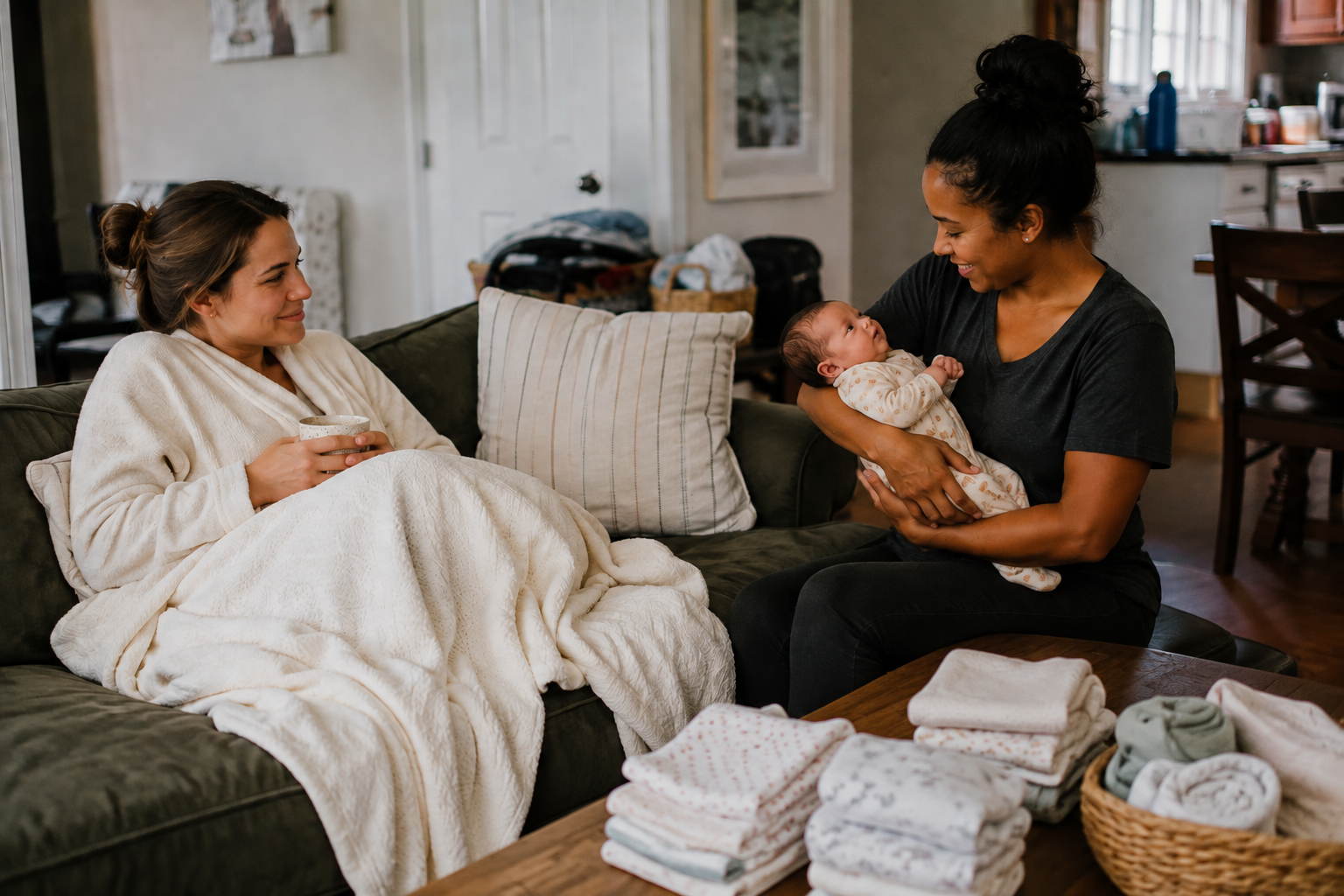
A four-hour daytime visit might begin with your doula checking in about how the night went. She may take the baby while you shower and eat breakfast, wash bottles or pump parts, help with a feeding, prepare a simple lunch, fold baby laundry, and care for your newborn while you get an hour or two of uninterrupted rest.
The next visit might look completely different.
Maybe you have questions about babywearing. Perhaps your newborn has suddenly become fussier in the evenings. Maybe you'd like help figuring out sleepy cues, or you simply need someone to hold the baby while you spend uninterrupted time with your older child.
There isn't a rigid agenda.
Your postpartum doula's job is to look at what would make that particular day feel easier and more manageable for your family.
Days 1–3: Settling In at Home
The first few days home with a newborn can feel like a blur. There are feedings, diaper changes, very little sleep, physical recovery, visitors, laundry, bottles, and an entirely new little person to get to know.
During these first days, postpartum doula support may be especially hands-on.
Your doula might hold and soothe the baby while you shower or nap, prepare a snack while you feed your baby, wash bottles and pump parts, start a load of baby laundry, or help you figure out why your newborn seems unsettled.
She can also answer the seemingly endless questions that often come with those first days:
Is this normal?
Is the baby eating often enough?
How do I swaddle them again?
Why won't they sleep when I put them down?
How can I tell if they're tired or hungry?
Having an experienced professional in your home gives you someone to turn to for reassurance, education, and practical guidance as you begin getting to know your baby.
Days 4–7: Finding Your Rhythm
By the end of the first week, many families start realizing that newborn life isn't necessarily about creating a perfect schedule. It's about learning your baby's patterns.
Your postpartum doula may begin helping you recognize feeding cues, sleepy cues, wakeful periods, and the different ways your baby communicates.
She might help you experiment with soothing techniques, practice babywearing, set up more convenient feeding or diapering stations, or find small ways to make your daily routine easier.
This is also when the exhaustion of those first several nights can start catching up with parents.
Sometimes the most helpful answer to what does a doula do is incredibly simple: she creates space for you to rest.
Your doula may care for your baby between feedings so you can nap, take a long shower, eat an actual meal, or simply sit quietly without being responsible for another human for a little while.
Weeks 2–3: Building Confidence
A couple of weeks into parenthood, you probably know your baby much better than you did on day one. But new questions often replace the old ones.
Your doula's role may begin shifting from showing you how to do something to helping you feel confident doing it yourself.

You might work together on bathing your baby, introducing a bottle, learning different burping positions, navigating periods of fussiness, practicing tummy time, or finding ways to make feeding sessions more comfortable.
A postpartum doula can also help with the everyday tasks that become surprisingly difficult when you're caring for a newborn.
While you feed the baby, she might fold baby laundry, wash bottles, restock the changing station, or prepare something simple for you to eat.
These tasks may sound small, but when you're recovering from birth and caring for a newborn around the clock, having another set of knowledgeable hands can make a significant difference.
Weeks 4–6: Adjusting to Your New Normal
Around the one-month mark, life may begin feeling a little more familiar, but that doesn't necessarily mean it feels easy.
Babies change quickly during these first several weeks. Feeding patterns may shift, wake periods may get longer, and your previously sleepy newborn may suddenly become much more alert.
A postpartum doula can help your family adjust alongside your baby.
Support at this stage might include age-appropriate play and tummy time, understanding changing sleep needs, troubleshooting new challenges, helping establish flexible routines, and giving parents time to take care of themselves.
For families with older children, your doula may also help make the transition easier for siblings while you balance everyone's needs.
Most importantly, postpartum support continues to center the parent too. The fourth trimester isn't just about caring for a newborn. It's also about recovering from birth and adjusting physically and emotionally to an enormous life change.
Months 2–3: Supporting a Growing Baby
Postpartum doulas aren't only helpful during the first few days after birth.
Many families continue postpartum support for several weeks or months, particularly as babies become more alert and routines continue to change.
By this stage, your doula may help with developmentally appropriate activities, tummy time, feeding routines, understanding wake windows and sleepy cues, preparing for transitions, and helping your family develop systems that work long term.
Parents may also use doula visits as dedicated time to sleep, exercise, attend appointments, spend one-on-one time with an older child, or simply catch up on life.
The support evolves because your family is evolving too.
What Does an Overnight Postpartum Doula Do?
For many exhausted new parents, nighttime support can be one of the most valuable forms of postpartum care.
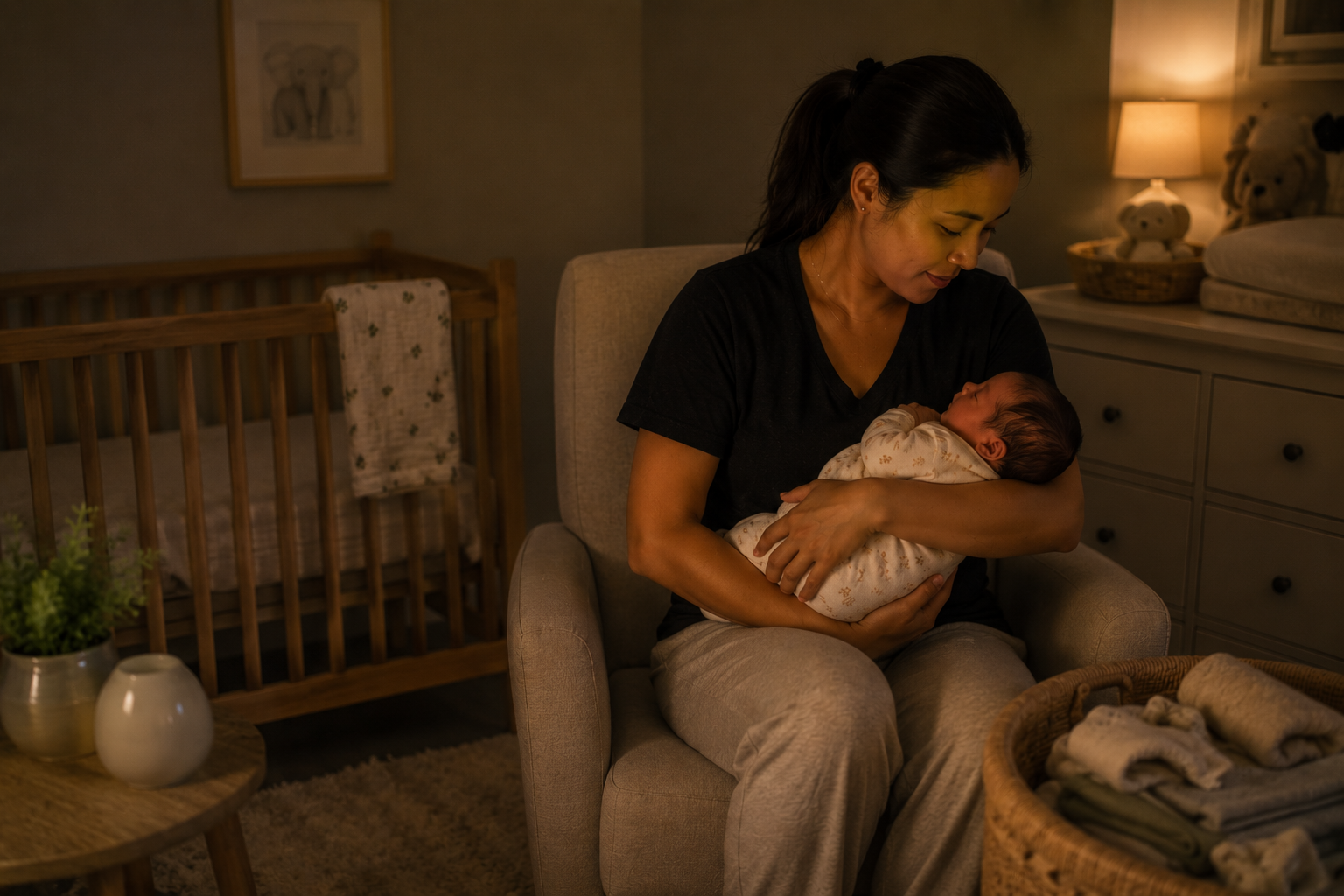
An overnight postpartum doula typically arrives in the evening and provides newborn support throughout the night so parents can get more rest.
Depending on your family's feeding preferences, an overnight doula may:
Respond when the baby wakes
Change diapers
Soothe and settle the baby
Prepare bottles
Bring the baby to a breastfeeding parent for feeds
Burp and resettle the baby after feeding
Wash bottles and pump parts
Support safe and developmentally appropriate sleep practices
Keep track of feedings and diaper changes when requested
For breastfeeding families, overnight support doesn't necessarily mean sleeping uninterrupted for eight hours. Instead, your doula can handle many of the tasks surrounding each feeding so you can return to sleep more quickly.
For bottle-feeding families, a doula may be able to take over some or all nighttime feedings depending on your family's preferences.
Who Benefits From a Postpartum Doula?
There is a common misconception that postpartum doulas are only for first-time parents. In reality, many different families can benefit from postpartum support.
A postpartum doula may be especially helpful for:
First-time parents learning newborn care
Families welcoming twins or multiples
Parents recovering from a C-section or difficult delivery
Families without relatives or a strong local support system nearby
Parents whose partner is returning to work
Families adjusting to life with a newborn and older siblings
Parents who want additional feeding or newborn education
Experienced parents who remember how demanding the newborn stage can be and want more support this time
You don't have to be struggling to benefit from a postpartum doula.
Sometimes families hire postpartum support simply because they recognize that having knowledgeable help during a major life transition can make the experience easier.
What Doesn't a Postpartum Doula Do?
Understanding what does a doula do is easier when you also understand the boundaries of the role.
A postpartum doula is not a medical provider. She does not diagnose medical conditions, prescribe treatment, or replace your pediatrician, OB-GYN, midwife, therapist, or other qualified healthcare providers.
Instead, doulas provide non-medical support and can help families recognize when a concern should be brought to an appropriate healthcare professional.
A postpartum doula also isn't a housekeeper. While many doulas help with light household tasks such as baby laundry, bottles, pump parts, simple meal preparation, or tidying areas used during their shift, their primary purpose is supporting the postpartum family.
How Long Do Families Work With a Postpartum Doula?
There isn't one right answer.
Some families want intensive support during the first week or two after birth. Others schedule a few daytime visits each week for several months. Some primarily need overnight support, while others use a combination of daytime and nighttime care.
You also don't have to know exactly what you'll need before your baby arrives.
One of the benefits of postpartum doula care is that support can often change as your family's needs change.
The newborn stage moves quickly. The type of help you need during your baby's first week may look completely different from what you need six weeks later.
Frequently Asked Questions About Postpartum Doulas
What does a postpartum doula do during the day?
A daytime postpartum doula supports both the baby and the parents. A typical visit may include newborn care, feeding support, baby laundry, bottle or pump-part cleaning, meal preparation, newborn education, sibling support, and caring for the baby while parents rest or take care of themselves.
Does a postpartum doula take care of the baby?
Yes, but newborn care is only part of the role. A postpartum doula cares for the baby while also supporting and educating the parents. The goal is to support the family as a whole rather than simply provide childcare.
Can a postpartum doula help me get more sleep?
Yes. Daytime doulas can care for your baby while you nap, and overnight postpartum doulas can handle many aspects of nighttime newborn care. The exact arrangement depends on how your baby is fed and your family's preferences.
Does a postpartum doula clean?
A postpartum doula isn't a housekeeper, but many doulas assist with light household tasks that directly support the postpartum family. This may include washing bottles and pump parts, doing baby laundry, preparing simple meals or snacks, and tidying areas used during the shift.
Can a postpartum doula be alone with my baby?
Yes. Depending on your family's comfort level and the doula's services, a postpartum doula can care for your newborn while you sleep, shower, spend time with another child, or take care of yourself. Families should always discuss expectations and boundaries with their doula beforehand.
How many hours does a postpartum doula work?
It varies by family and doula. Some families schedule shorter daytime visits several times per week, while others need longer daytime shifts or overnight support. The frequency and length of care can often be customized around the family's postpartum needs.
Is a postpartum doula the same as a nanny?
No. While both may provide excellent infant care, their roles are different. A nanny's primary responsibility is ongoing childcare. A postpartum doula specializes in the postpartum period and focuses on supporting the newborn, the recovering parent, and the family's transition after birth.
When should I hire a postpartum doula?
Many families begin searching during pregnancy so support is already arranged before their baby arrives. However, families can also seek postpartum support after birth if they realize they need additional help.
Is a postpartum doula worth it?
That depends on your family's needs, budget, and existing support system. For many families, having an experienced professional provide newborn care, education, practical help, and opportunities for rest can make the early postpartum period feel significantly more manageable.
What Does a Doula Do? Supporting Your Family Through the Fourth Trimester
When parents ask "what does a doula do?", there isn't one universal daily checklist.
One day, your doula may spend most of her visit teaching you soothing techniques and answering newborn questions. Another day, she may wash bottles, make you lunch, fold baby laundry, and hold your sleeping newborn while you finally get a much-needed nap.
And sometimes, what a new parent needs most is simply an experienced, reassuring person beside them while they figure out their new normal.
Postpartum doula care is designed to meet your family where you are and provide knowledgeable, compassionate support as you navigate one of life's biggest transitions.
Wondering what postpartum support could look like for your family?Silver Lining Doula & Nanny Services connects families with experienced postpartum doulas for daytime and overnight support throughout the Triangle. Whether you're preparing for your first baby or adding another little one to your family, we're here to help make those early weeks feel a little more supported.